
CACSA Launches Model Task Force on High-Quality Authorizing of Microschools
This initiative is designed to support Colorado authorizers in effectively evaluating, approving, and overseeing microschools and other emerging small, innovative school models. The work will focus on strengthening authorizing practices across the full lifecycle—from application through implementation, opening, and ongoing oversight.
The goal is to ensure that microschools approved in Colorado are not only aligned to statutory and accountability expectations but are also operationally viable, intentionally designed, and prepared to serve students effectively from day one.
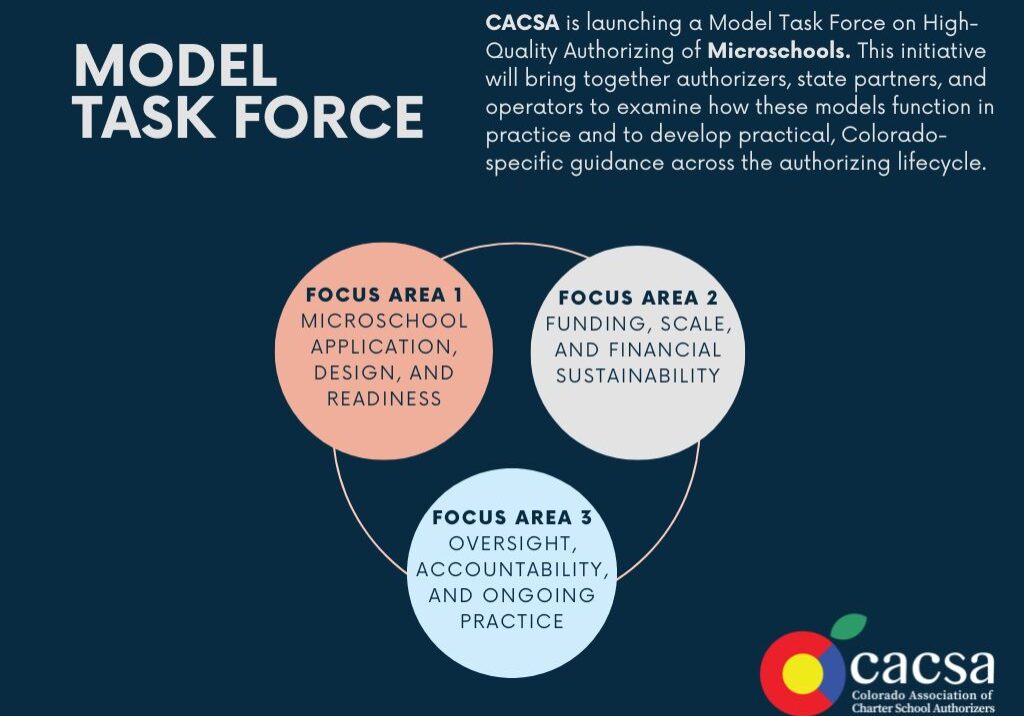

Microschool Application, Design, and Readiness
This focus area will examine how authorizers evaluate microschool proposals and determine
readiness for approval and opening.
Key areas of focus include:
● Clarity and coherence of the school model
● Alignment between enrollment size, staffing, and program design
● Instructional approach and student support structures
● Facility and operational considerations for small-scale models
● Pre-opening requirements and timelines appropriate to microschools
Funding, Scale, and Financial Sustainability
This focus area will address the financial realities of microschools, particularly regarding smaller
enrollment and nontraditional cost structures.
Discussions will focus on:
● Per-pupil funding viability at small scale
● Staffing models and cost alignment
● Use of startup funding, including CSP grants where applicable
● Authorizer oversight of financial plans and sustainability
● Alignment between approved budgets and actual implementation


Oversight, Accountability, and Ongoing Practice
This focus area will examine how authorizers oversee microschools once they are operational.
Through data collection and practitioner input, the task force will explore how authorizers ensure that:
● Students are consistently engaged and making academic progress
● Instruction aligns with the approved model
● Staffing and qualifications meet requirements
● Schools comply with applicable laws and reporting expectations
● Performance frameworks appropriately reflect microschool design